
Description
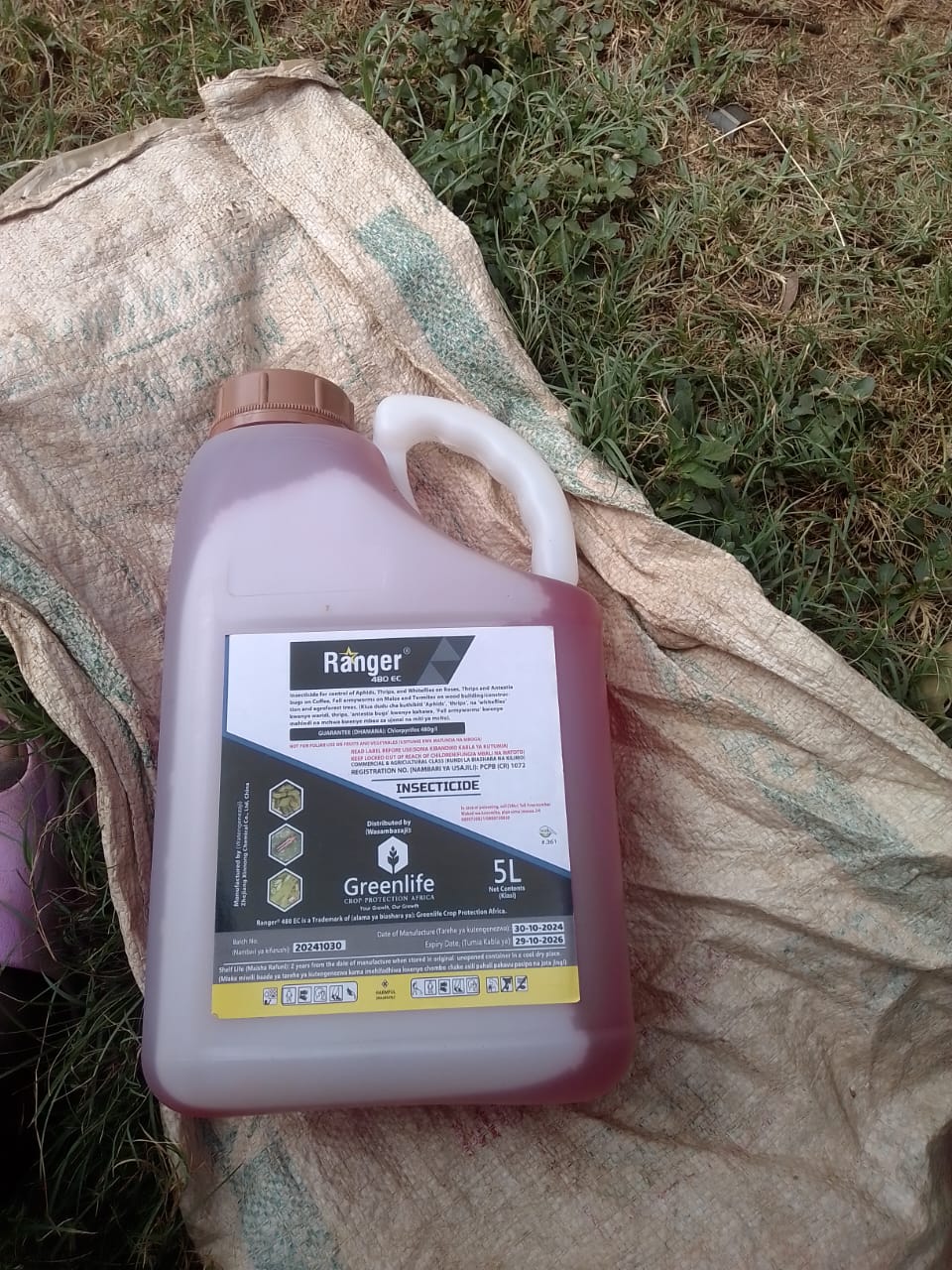
Ranger 480EC – Professional Broad-Spectrum Insecticide & Termiticide
Ranger 480EC is a highly effective, broad-spectrum insecticide and termiticide powered by 480 g/L chlorpyrifos. This versatile organophosphate solution delivers rapid knockdown and long-lasting residual control against a wide range of agricultural pests and wood-destroying termites, making it an essential tool for crop protection and structural pest management.
Active Ingredient & Formulation
Chlorpyrifos: 480 g/L (48% w/v)
- Formulation: Emulsifiable Concentrate (EC)
- Chemical Class: Organophosphate
- Activity Type: Non-systemic contact and stomach poison
- Residual Action: Extended protection lasting several weeks depending on application and environmental conditions
How Ranger 480EC Works
Mode of Action: Chlorpyrifos is a powerful organophosphate insecticide that inhibits acetylcholinesterase, an essential enzyme in the insect nervous system. This disruption leads to overstimulation of nerve cells, resulting in paralysis and death.
Dual Control Mechanism:
- Contact Action: Kills insects on direct contact with treated surfaces or spray droplets
- Stomach Poison: Controls pests that ingest treated plant material or contaminated food sources
This comprehensive approach ensures effective control of both surface-feeding and internal-feeding pests.
Target Pests – Agricultural Control
Sucking Insects:
- Aphids – All species including green peach aphid, cotton aphid, and grain aphids
- Whiteflies – Greenhouse whitefly and silverleaf whitefly
- Thrips – Western flower thrips, onion thrips, and other species
- Leafhoppers – Controls various leafhopper species
- Mealybugs – Effective against multiple mealybug species
- Scales – Soft and armored scale insects
Chewing Insects:
- Caterpillars – Armyworms, cutworms, bollworms, and leaf rollers
- Beetles – Colorado potato beetle, flea beetles, weevils
- Leaf miners – Reduces damage from mining larvae
- Stem borers – Controls boring insects in cereals and vegetables
Soil Pests:
- Root aphids – Protects root systems from aphid damage
- Cutworms – Soil application controls larvae
- White grubs – Reduces soil-dwelling beetle larvae populations
Target Pests – Termite Control
Subterranean Termites:
- Creates protective chemical barriers around structures
- Prevents termite entry and colony establishment
- Protects wooden structures, fence posts, and tree trunks
- Long-lasting soil treatment for foundation protection
Approved Crop Applications
Vegetables:
- Tomatoes – Controls aphids, whiteflies, fruit worms, and leaf miners
- Cabbage & Brassicas – Manages diamond back moth, aphids, and caterpillars
- Beans – Controls aphids, thrips, and pod borers
- Cucurbits – Protects against aphids, whiteflies, and cucumber beetles
- Onions – Manages thrips and root maggots
- Potatoes – Controls Colorado potato beetle and aphids
Fruit Trees:
- Mango – Controls fruit flies, mango hoppers, and scale insects
- Citrus – Manages citrus psyllid, aphids, scales, and fruit flies
- Avocado – Controls thrips and scale insects
- Stone Fruits – Protects against aphids and caterpillars
Field Crops:
- Cereals (Maize, Wheat, Rice) – Controls stem borers, aphids, and armyworms
- Coffee – Manages coffee berry borer, leaf miners, and scales
- Cotton – Controls bollworms, aphids, and jassids
Ornamentals:
- Roses – Comprehensive protection against aphids, thrips, caterpillars, and beetles
- Cut Flowers – Maintains quality by controlling sucking and chewing pests
- Landscape Plants – General pest management in commercial landscapes
Application Methods & Rates
Foliar Spray Application:
- Typical Rate: 20-40 ml per 20 liters of water (varies by pest and crop)
- Coverage: Apply as thorough spray to wet all plant surfaces
- Timing: Apply at first sign of pest activity or preventively during vulnerable growth stages
- Frequency: Repeat applications at 7-14 day intervals as needed, following label restrictions
Soil Treatment for Termites:
- Pre-Construction: Apply to soil before pouring foundation
- Post-Construction: Trench and treat around building perimeter
- Tree Protection: Drench soil around valuable trees
- Rate: Follow label specifications for termite barrier treatments (typically higher concentrations)
Equipment:
- Backpack sprayers
- Knapsack sprayers
- Boom sprayers for large-scale applications
- Soil injection equipment for termite treatments
Key Benefits
Broad-Spectrum Control – Single product manages multiple pest species across diverse crop types, simplifying pest management programs and reducing chemical inventory.
Rapid Knockdown – Fast-acting formula stops pest feeding within hours, minimizing crop damage and protecting yield potential.
Long Residual Activity – Extended protection (2-4 weeks) reduces application frequency and labor costs while maintaining consistent pest suppression.
Versatile Applications – Effective as foliar spray for agricultural pests and soil treatment for termite control, offering comprehensive protection.
Cost-Effective Solution – Concentrated formulation and broad-spectrum activity provide excellent value for professional growers and pest management operators.
Proven Performance – Chlorpyrifos has decades of successful use in agriculture and structural pest control with well-documented efficacy.
Deep Penetration – Excellent plant penetration ensures control of hidden pests in dense foliage and crop canopies.
Technical Specifications
- Active Ingredient: Chlorpyrifos 480 g/L (48% EC)
- Formulation Type: Emulsifiable Concentrate
- Chemical Group: Organophosphate (IRAC Group 1B)
- Mode of Action: Acetylcholinesterase inhibitor
- Activity: Non-systemic, contact and stomach poison
- Mixing: Readily mixes with water for spray applications
- Color: Typically amber to brown liquid
- Odor: Characteristic organophosphate odor
Safety Precautions & Warnings
CRITICAL SAFETY INFORMATION:
⚠️ Highly Toxic: Chlorpyrifos is a toxic organophosphate. Extreme care must be taken during handling, mixing, and application.
⚠️ Cholinesterase Inhibitor: Can cause serious health effects through inhalation, skin absorption, or ingestion. Symptoms of exposure include headache, nausea, dizziness, excessive sweating, blurred vision, muscle twitching, and in severe cases, respiratory failure.
MANDATORY Personal Protective Equipment (PPE):
- Chemical-resistant gloves (nitrile or butyl rubber)
- Long-sleeved shirt and long pants (or chemical-resistant coveralls)
- Chemical-resistant boots and socks
- Protective eyewear or face shield
- Respirator with appropriate cartridges when required by label
- Chemical-resistant apron for mixing and loading operations
Handling Requirements:
- Mix and load in well-ventilated areas
- Avoid all contact with skin, eyes, and clothing
- Never eat, drink, smoke, or chew while handling
- Wash hands and exposed skin thoroughly with soap and water after handling
- Shower and change into clean clothes after application
- Wash contaminated clothing separately before reuse
Environmental Precautions:
⚠️ Aquatic Toxicity: Extremely toxic to fish and aquatic organisms. Do not contaminate water sources, ponds, streams, or drainage ditches.
⚠️ Bee Toxicity: Toxic to honeybees. Do not apply to blooming crops or when bees are actively foraging. Apply during early morning or late evening hours.
⚠️ Wildlife: Highly toxic to birds and beneficial insects. Use with caution in areas with wildlife activity.
Buffer Zones: Maintain appropriate buffer distances from water bodies, apiaries, and sensitive areas as specified on the product label.
Storage:
- Store in original container with tight-fitting lid
- Keep in locked, well-ventilated area away from heat and direct sunlight
- Store away from food, feed, seed, fertilizers, and veterinary supplies
- Keep out of reach of children, pets, and unauthorized persons
Disposal:
- Triple rinse empty containers and puncture to prevent reuse
- Dispose of containers and unused product according to local regulations
- Never reuse empty containers
Re-Entry Interval (REI): Minimum 24-48 hours (check label for specific crops and applications). Do not enter treated areas without appropriate PPE during REI.
Pre-Harvest Interval (PHI): Varies by crop – typically 7-21 days. Always consult product label for specific PHI requirements.
Best Management Practices
Resistance Management:
- Chlorpyrifos is IRAC Group 1B (organophosphate)
- Rotate with insecticides from different chemical groups (Groups 3A, 4A, 5, etc.)
- Avoid consecutive applications of organophosphates
- Monitor pest populations for signs of reduced efficacy
- Use economic thresholds to determine treatment necessity
Integrated Pest Management (IPM):
- Use as part of comprehensive IPM strategy
- Scout fields regularly to assess pest pressure
- Employ cultural controls (crop rotation, sanitation, resistant varieties)
- Preserve beneficial insects by spot-treating when possible
- Combine with biological control agents where compatible
Application Best Practices:
- Calibrate spray equipment before each use
- Apply when weather conditions are favorable (low wind, moderate temperature)
- Ensure thorough coverage, especially undersides of leaves
- Avoid application before rain to prevent runoff
- Do not apply during heat of day to reduce phytotoxicity risk
- Maintain accurate records of all applications
Tank Mixing:
- Compatible with many pesticides and fertilizers
- Always conduct jar test before mixing commercial quantities
- Add Ranger 480EC to spray tank with agitation running
- Follow proper mixing order: water, then Ranger 480EC, then other products
Why Choose Ranger 480EC?
Agricultural professionals, commercial growers, and pest control operators trust Ranger 480EC for its proven efficacy, broad-spectrum activity, and cost-effective performance. With decades of successful use in protecting high-value crops and structures, Ranger 480EC remains a cornerstone product for managing challenging pest problems.
The powerful combination of rapid knockdown and extended residual control makes Ranger 480EC ideal for both preventive and curative pest management strategies across diverse agricultural and structural applications.
Ranger 480EC – Powerful, proven protection for crops and structures.
Reviews
There are no reviews yet.