
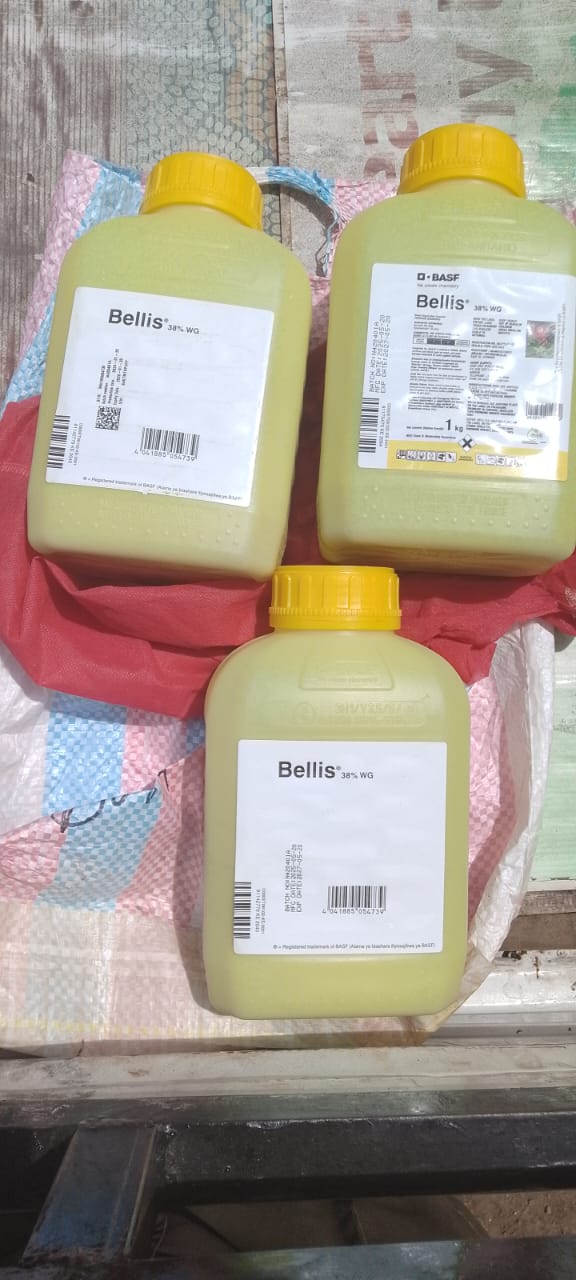
Description
Bellis 38 WG – Premium Dual-Active Systemic & Protectant Fungicide
Bellis 38 WG by BASF represents advanced fungicide technology, combining protective and systemic activity in a convenient Water-Dispersible Granule formulation. This professional-grade fungicide delivers exceptional control of major fungal diseases across fruit crops, vegetables, and ornamentals while providing excellent resistance management through its dual mode of action.
Powerful Dual Active Ingredient System
Boscalid (252 g/kg – 25.2% w/w)
- SDHI fungicide (Succinate Dehydrogenase Inhibitor)
- Inhibits Complex II of fungal respiration chain
- Strong preventive and curative activity
- Excellent residual protection
- FRAC Group 7
Pyraclostrobin (128 g/kg – 12.8% w/w)
- QoI fungicide (Quinone outside Inhibitor – Strobilurin)
- Blocks electron transport at cytochrome bc1 complex
- Broad-spectrum disease control
- Translaminar movement for internal protection
- FRAC Group 11
Total Active Content: 380 g/kg (38% w/w)
This synergistic combination provides multi-site attack on fungal pathogens, delivering superior disease control and proactive resistance management.
How Bellis 38 WG Works
Dual Mode of Action for Maximum Efficacy:
Boscalid (FRAC 7) – Disrupts fungal energy production by inhibiting succinate dehydrogenase enzyme in the mitochondrial respiration chain, starving the fungus of energy needed for growth and reproduction.
Pyraclostrobin (FRAC 11) – Prevents cellular respiration by blocking electron transfer at the Qo site of cytochrome bc1, halting ATP production and fungal metabolism.
Combined Activity:
- Inhibits spore germination – Prevents disease establishment
- Stops mycelial growth – Halts disease spread in plant tissues
- Disrupts sporulation – Reduces disease pressure for future generations
- Protectant action – Creates barrier on plant surfaces
- Systemic activity – Moves within plant tissues for internal protection
- Translaminar movement – Penetrates leaves to protect both surfaces
Target Diseases – Comprehensive Control
Powdery Mildew (Multiple species)
- Excellent preventive and curative control
- Effective on apples, cucurbits, roses, and vegetables
- Stops disease progression and prevents sporulation
Downy Mildews (Peronospora, Plasmopara species)
- Controls downy mildew on cucurbits, grapes, and vegetables
- Prevents leaf damage and defoliation
- Protects fruit quality
Botrytis (Gray Mold) – Botrytis cinerea
- Outstanding control on flowers, fruits, and vegetables
- Post-harvest treatment capability for apples, pears, and roses
- Reduces storage losses and extends shelf life
- Controls on strawberries, tomatoes, and ornamentals
Black Spot – Diplocarpon rosae (on roses)
- Superior protection of rose foliage
- Maintains ornamental quality in commercial and landscape roses
- Prevents defoliation and plant stress
Apple & Pear Scab – Venturia inaequalis and V. pirina
- Excellent preventive control during critical infection periods
- Protects fruit finish and marketability
- Reduces russeting and fruit blemishes
Anthracnose (Colletotrichum species)
- Controls on various crops including vegetables and fruits
- Prevents fruit rot and leaf lesions
Alternaria (Early Blight)
- Effective control on tomatoes, potatoes, and vegetables
- Prevents defoliation and yield loss
- Protects fruit from infection
Cercospora Leaf Spot
- Controls on various crops
- Maintains photosynthetic capacity
- Prevents premature defoliation
Approved Crops & Applications
Tree Fruits:
- Apples – Scab, powdery mildew, sooty blotch, flyspeck
- Pears – Scab, powdery mildew, leaf spot
- Post-harvest: Reduces botrytis storage rot
Vegetables:
- Tomatoes – Early blight (Alternaria), powdery mildew, gray mold
- Peppers – Powdery mildew, anthracnose, gray mold
- Cabbage & Brassicas – Alternaria, powdery mildew
- Cucumbers – Powdery mildew, downy mildew, anthracnose
- Watermelon – Powdery mildew, downy mildew, anthracnose
- Pumpkins & Squash – Powdery mildew, downy mildew
- Cantaloupe & Melons – Powdery mildew, downy mildew, gummy stem blight
Ornamentals:
- Roses – Black spot, powdery mildew, botrytis
- Cut Flowers – Botrytis, powdery mildew, leaf spots
- Landscape Ornamentals – Various foliar diseases
Other Crops:
- Stone fruits, berries, and other specialty crops (check label for specific approvals)
Application Instructions
Application Rates:
- Standard Rate: 325 grams per acre (800 g/ha)
- Water Volume: 32-160 gallons per acre (300-1500 L/ha)
- Specific rates vary by crop and disease – always consult product label
Application Timing:
- Preventive: Apply before disease establishment when conditions favor infection
- Early Infection: Apply at first sign of disease symptoms for curative activity
- Critical Periods: Focus on flowering, fruit set, and rapid growth stages
- Weather-based: Apply before predicted rain events during susceptible growth stages
Application Frequency:
- Spray Interval: 7-14 days depending on disease pressure and weather conditions
- Maximum Applications: 4 applications per growing season
- Consecutive Applications: No more than 2 consecutive applications before rotating to different FRAC group
- Resistance Management: Alternate with fungicides from FRAC groups other than 7 and 11
Mixing Instructions:
- Fill spray tank to half the required volume with clean water
- Start agitation
- Add required amount of Bellis 38 WG while maintaining agitation
- Continue filling tank to final volume
- Maintain continuous agitation during mixing and application
- Use spray mixture within 24 hours
Application Method:
- Foliar spray with calibrated equipment
- Ensure thorough coverage of all plant surfaces
- Use appropriate nozzles for fine to medium droplets
- Apply when foliage is dry for best adhesion
Pre-Harvest Interval (PHI)
- Apples & Pears: 7 days minimum
- Tomatoes: Typically 0-3 days (verify on label)
- Cucurbits: Typically 0-3 days (verify on label)
- Roses & Ornamentals: Not applicable (non-food crop)
Note: PHI varies by crop and region. Always consult the product label for specific requirements in your area.
Re-Entry Interval (REI)
Standard REI: 24 hours after application
Exception: Workers may enter treated area within 24 hours if wearing:
- Long-sleeved shirt and long pants
- Chemical-resistant gloves
- Shoes and socks
Key Benefits
1. Dual Mode of Action – Two complementary mechanisms (FRAC 7 + 11) provide superior disease control and proactive resistance management.
2. Broad-Spectrum Activity – Single product controls multiple diseases across diverse crops, simplifying spray programs.
3. Preventive + Curative – Protectant activity prevents infection while systemic activity stops early disease development.
4. Post-Harvest Capability – Unique ability to reduce botrytis storage rot in apples, pears, and roses extends marketability.
5. Excellent Residual Control – Long-lasting protection (7-14 days) reduces application frequency and labor costs.
6. Translaminar Movement – Penetrates leaf tissue to protect both upper and lower leaf surfaces.
7. Rainfast – Once dry, provides excellent rain resistance and prolonged protection.
8. Tank Mix Compatible – Easily integrated with other crop protection products and fertilizers.
9. Low Use Rates – Concentrated formulation delivers effective control at economical rates.
10. Plant Health Benefits – Physiological effects beyond disease control may enhance crop vigor and yield.
Resistance Management Strategy
CRITICAL – Proactive Resistance Management Required:
Bellis 38 WG contains FRAC Group 7 and Group 11 fungicides, both at medium to high risk for resistance development. Follow these guidelines strictly:
Maximum Applications:
- 4 applications maximum per season
- 2 consecutive applications maximum before rotation
Rotation Requirements:
- After 2 applications of Bellis 38 WG, rotate to fungicides from different FRAC groups
- Suitable rotation partners: FRAC Groups 1, 3, 5, M (multi-site protectants)
- Do not rotate to other Group 7 or Group 11 products
Tank Mixing:
- Consider tank mixing with multi-site protectants (FRAC Group M) such as:
- Chlorothalonil
- Mancozeb
- Copper-based products
- Sulfur (where compatible)
Monitoring:
- Scout regularly for disease control failures
- Report suspected resistance to your agricultural advisor
- Maintain detailed spray records
Integrated Disease Management:
- Use resistant varieties when available
- Implement cultural practices (sanitation, spacing, pruning)
- Remove infected plant material
- Optimize irrigation to reduce leaf wetness
- Apply only when disease risk is present
Tank Mixing & Compatibility
Bellis 38 WG is compatible with many commonly used agricultural products:
Compatible Products:
- Most insecticides
- Other fungicides (verify FRAC group for rotation)
- Foliar fertilizers
- Plant growth regulators
Important Mixing Precautions:
- Always conduct jar test before mixing commercial quantities
- Avoid highly alkaline products (pH >8)
- Follow proper mixing order: Water → WG formulations → Flowables → Emulsifiable concentrates → Surfactants
- Check for physical incompatibility: Clumping, separation, or excessive foaming
- Consult labels of all products being tank-mixed
Safety & Environmental Precautions
Personal Protective Equipment (PPE):
- Long-sleeved shirt and long pants
- Chemical-resistant gloves (nitrile, butyl, or barrier laminate)
- Shoes and socks
- Protective eyewear
- Dust/mist respirator during mixing and loading
Handling Precautions:
- Avoid contact with eyes, skin, and clothing
- Do not eat, drink, or smoke while handling
- Wash hands thoroughly after use
- Remove contaminated clothing and wash before reuse
- Shower after prolonged exposure
Environmental Protection:
- Do not apply directly to water bodies
- Maintain buffer zones from streams, ponds, and wetlands
- Avoid drift to non-target areas
- Toxic to aquatic organisms – prevent runoff
- Do not contaminate water through cleaning equipment or disposal
Pollinator Protection:
- Do not apply to blooming crops when bees are foraging
- Apply during early morning or late evening when bees are not active
- Observe bee precautionary statements on label
Storage & Disposal:
- Store in original container in cool, dry location
- Keep away from food, feed, and seed
- Keep out of reach of children and animals
- Triple rinse empty containers and dispose according to local regulations
- Do not reuse containers
Technical Specifications
- Product Name: Bellis 38 WG
- Manufacturer: BASF
- Formulation: Water-Dispersible Granule (WG)
- Active Ingredients:
- Boscalid 252 g/kg (25.2%)
- Pyraclostrobin 128 g/kg (12.8%)
- Total Active Content: 380 g/kg (38%)
- FRAC Groups: 7 + 11
- Activity: Protectant and systemic
- Available Pack Sizes: 50g, 500g, 1kg (availability varies by region)
- Shelf Life: Typically 3 years when stored properly
Why Choose Bellis 38 WG?
Proven Performance: Bellis 38 WG is trusted by professional growers worldwide for its consistent, reliable disease control across diverse crops and growing conditions.
Advanced Technology: The combination of SDHI and strobilurin chemistry represents cutting-edge fungicide technology, delivering both immediate and long-term disease suppression.
Versatility: Few fungicides match Bellis 38 WG’s broad spectrum of disease control and crop applications, making it a cornerstone product for integrated disease management programs.
Quality Assurance: From BASF, a global leader in agricultural innovation, Bellis 38 WG meets the highest standards for product quality, consistency, and performance.
Post-Harvest Value: The unique ability to control botrytis in storage extends the value proposition beyond the field, protecting your investment through marketing.
Grower Success: Field-proven results demonstrate increased yields, improved fruit quality, extended shelf life, and enhanced profitability across commercial operations.
Whether protecting premium apples from scab, ensuring flawless roses for the cut flower market, or maximizing vegetable yields in high-value crops, Bellis 38 WG delivers the disease control excellence modern agriculture demands.
Bellis 38 WG – Two modes of action. Complete disease protection. Proven results.

Reviews
There are no reviews yet.